AutoOMR
Overview
The optomotor reflex (OMR) is a subconscious head rotation present in the majority of complex sight-seeing animals, and the frequency of OMR stimulation can be used to quantify one's vision.
For my Hillman Academy summer project, I developed AutoOMR, a neural-network driven prototype to autonomously stimulate and detect OMR, and sold this prototype to a Stony Brook University lab for $12,000.
Hardware
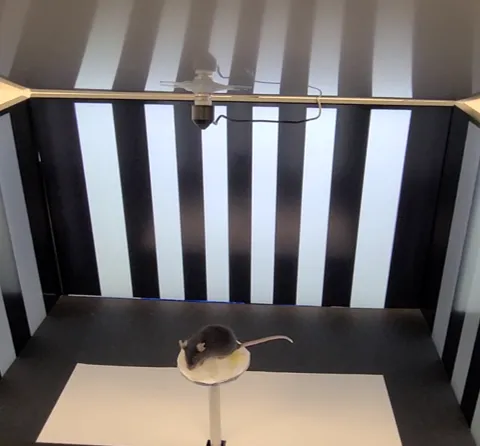
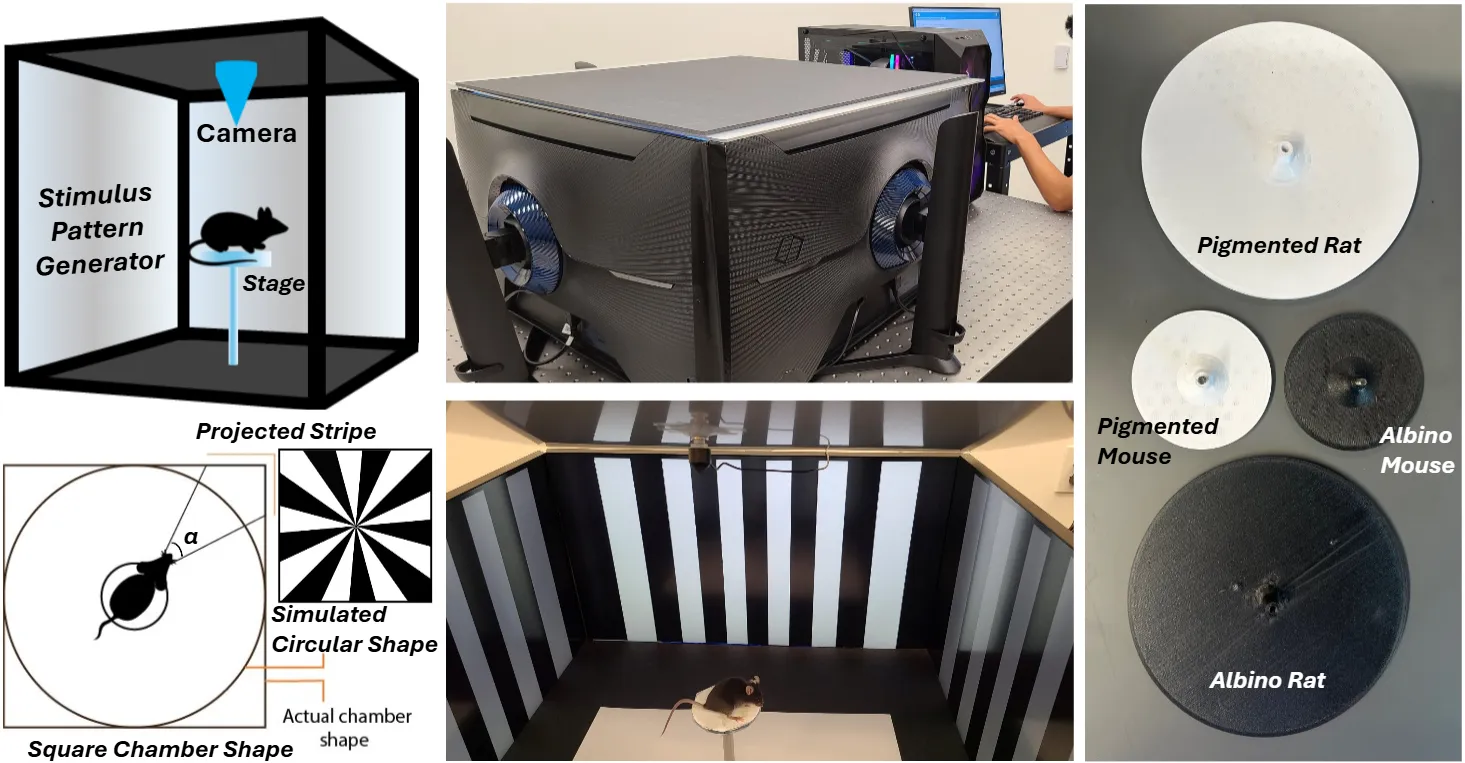
The role of this tool's hardware is to stimulate OMR. To do so, I designed a custom Optodrum — a tool typically costing tens of thousands of dollars — by displaying moving stripes onto 4 monitors placed in a square orientation, and distorting the stripes to make the square chamber appear circular at the mice's point of view.
Software
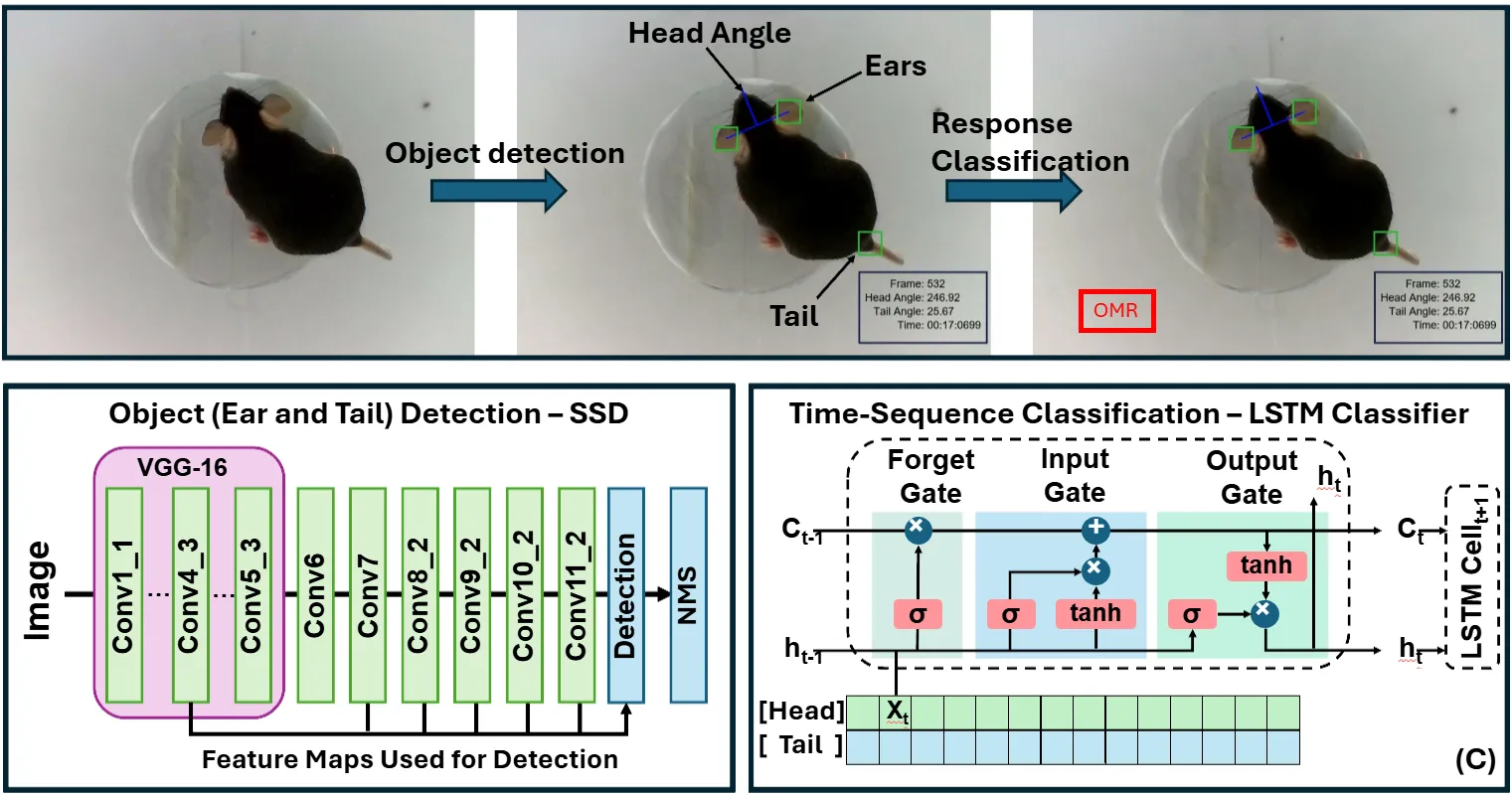
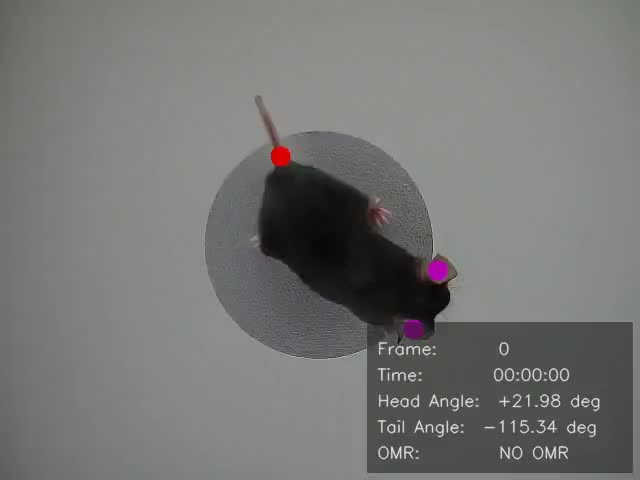
The role of this tool's software is to detect OMR. To do this, I placed an overhead camera to record the mice from an aerial view, and then labeled 5000+ images to train 2 neural networks: Single Shot Multibox Detector (SSD), and Long-Short Term Memory model (LSTM). SSD is used to identify ear and tail locations, allowing me to compute the head angle vector. The head angle is fed into LSTM, which classifies every frame as OMR or non-OMR.